

Proven technology for carbon-negative aviation fuel
We believe fuel made from surplus forest biomass is one of the most sustainable sources available for decarbonizing aviation. As airlines work to meet net-zero commitments, they need a fuel that's ready now.
Our technology turns a wasted resource into reliable, carbon-negative Sustainable Aviation Fuel — creating positive impacts on our ecosystems and economy along the way. Utilizing a biomass-powered production complex with integrated carbon capture and sequestration, we produce some of the most deeply carbon-negative SAF available on the market. CO₂ generated from our facilities is captured and permanently stored, not released.

Carbon-neutral feedstock for deeply carbon-negative fuel
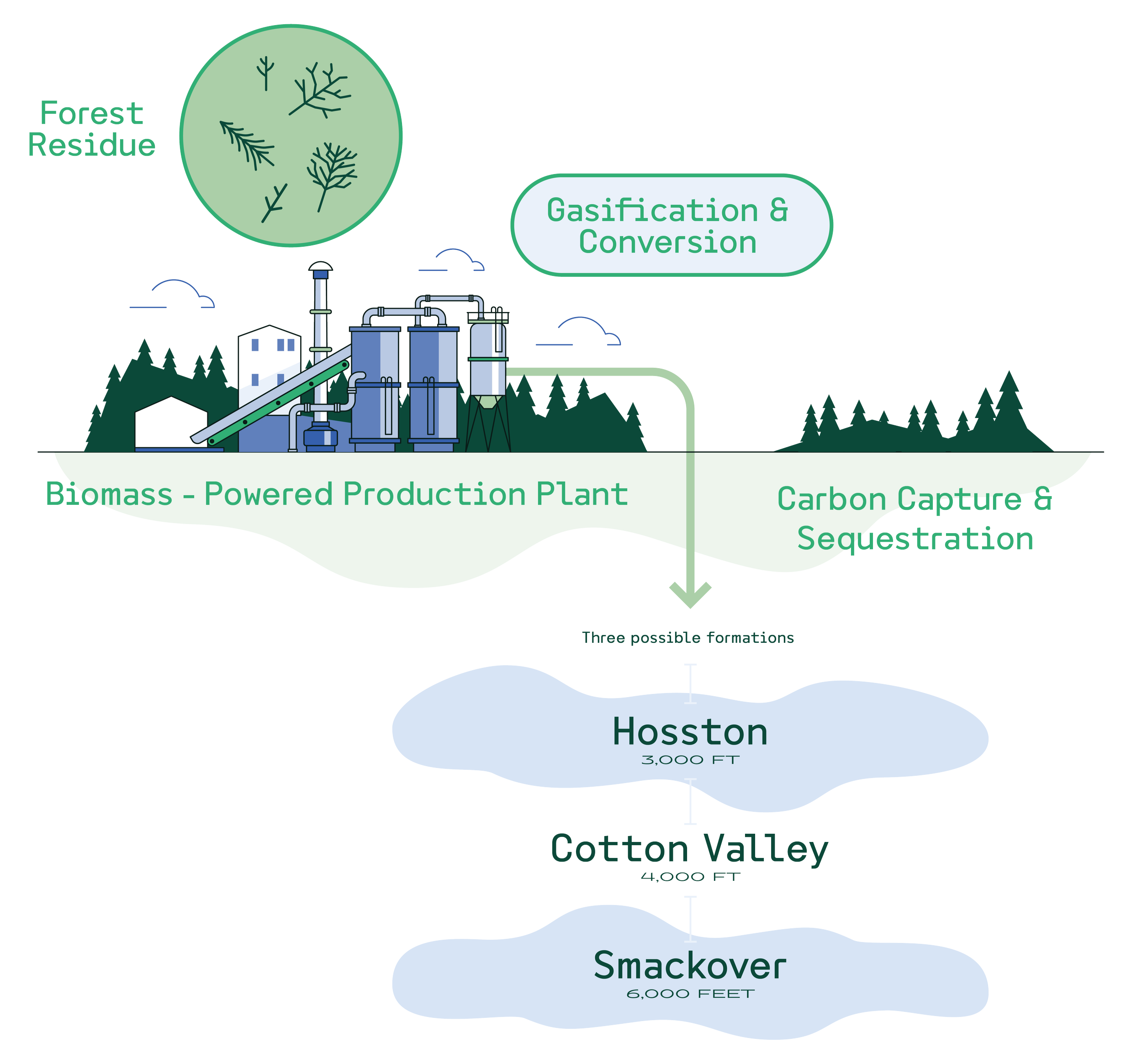
Our project will reduce Carbon Intensity from start to finish. First, we source surplus forest biomass from the timber industry that would otherwise go to waste. From this carbon-neutral source, we produce Sustainable Aviation Fuel at our biomass-powered complex through a proven gasification and conversion process.
CO₂ generated from production is biogenic. We capture carbon emissions from production and inject them deep into the ground in a process called carbon sequestration. This last step drives the Carbon Intensity score deeply negative, creating fuel that offsets airline carbon emissions and enables net-zero air transportation.
Sourcing surplus forest biomass creates healthier forests and a thriving local timber industry.
Nearly twice our feedstock requirement is available locally in the form of surplus forest biomass. These small or unhealthy trees can’t be used for timber and increase the risk of rot and infestation. When left to rot on the forest floor, they emit CO₂ into the atmosphere.
Our project creates demand for otherwise unused surplus forest biomass, enabling increased timber harvest and wood products production without touching a single crop acre or food-producing resource.


Carbon capture, utilization and storage (CCUS)
Our project reduces CO₂ emissions from start to finish, and the last step of the process makes us one of the most carbon-efficient options on the market. Capturing and storing carbon emitted during production is the only way to achieve the deeply negative Carbon Intensity score necessary to offset more than one gallon of conventional jet fuel for every gallon of SAF produced. Put simply: producing carbon-negative SAF isn't possible without CCUS.
How Will it work?
Carbon capture, utilization and storage is the process of capturing CO₂ before it goes into the atmosphere, then either reusing it or storing (sequestering) it underground. Our production site has access to the ideal geology for carbon sequestration. Carbon dioxide from our production process is immediately captured and injected deep into the ground, where it can be safely stored — fueling flights without the associated emissions.